How to use French toll roads on a motorbike
France's autoroute network covers the whole country and is the fastest way to get anywhere — but every kilometre is tolled and the booths can catch out UK riders who've only ever ridden the M1. This is everything you need to know to roll through the péage system smoothly and without overpaying.
How the French toll system works
France's autoroute network (A-roads) is the fastest way across the country and one of the most expensive per kilometre in Europe. The good news: motorbikes pay roughly 60% of car rates, and there are several ways to avoid the queues.
Concessions, not the state
The autoroutes are run by private concessions — Vinci (ASF, Cofiroute, Escota), Sanef, APRR/AREA, and a handful of smaller operators. That's why prices and the look of the tollbooths change as you move across the country. Free national roads (N-roads) and departmental roads (D-roads) are still maintained by the state and cost nothing to ride on.
Open vs. closed systems
Most autoroutes use a closed system: you take a ticket at entry and pay at exit based on distance travelled. Some shorter sections — particularly around city ring roads and the A14 west of Paris — use an open system with a flat fee at a single barrier. The signage is the same either way; just follow the péage symbols.
Motorbikes pay Class 5
French tolls have five vehicle classes. Motorbikes are Class 5 — the cheapest. Expect roughly €0.06–€0.10 per kilometre. Calais to Paris is about €20–€25, Calais to Nice all-autoroute is around €110. Bring a card and don't rely on cash — manned booths are disappearing.
Picking the right lane at the toll plaza
Lane choice is where most non-French riders go wrong. The colour and symbol over each lane tells you exactly what's accepted; the consequence of picking the wrong one is a backed-up queue you can't reverse out of.
Yellow lane — chip & PIN cards
Card symbol (CB / TPE / contactless). Insert or tap your card, take the receipt, gate opens. UK chip cards work in 99% of these. Contactless is rolled out almost everywhere now — saves you taking the glove off.
Orange 't' lane — Liber-t / Télépéage tags only
Reserved for vehicles with an electronic toll tag. Do NOT enter unless your bike has one — the barrier won't open and you'll block the lane. If you don't have a tag, ignore the orange lane completely.
Green lane — all payment methods
Cash, card, and tag. Often the longest queue on a Friday evening, but the safest pick if you're not sure. Some are unmanned and self-service only.
White/grey lane — staffed booth
An actual person, usually with a 'travailleur' or assistance sign. Useful for receipts on paper, for help with a problem ticket, or if your card refuses. Slowest but most flexible.
Stop at the left of the lane
The ticket machine and card reader sit at car-driver height on the left side of the lane. On a bike, kerb the left side of the lane and lean over. The lanes are deliberately narrow — don't try to pull up alongside the dispenser as you would in a car.
Liber-t tags — the game-changer for regular visitors
A small electronic tag on the bike that opens orange-lane barriers automatically. It's the single biggest quality-of-life upgrade for any rider who crosses the Channel more than once a year.
Bip&Go and Fulli — the two UK-facing operators
Both let UK residents sign up online without a French bank account. You order a moto-specific tag, fix it to the inside of the windscreen or on the upper fork with the supplied cradle, and you're set. Tags arrive in 5–7 working days by post.
Cost
Around €1.70–€2.50 per month subscription per tag (a few operators waive months you don't use), plus the actual tolls at the standard Class 5 rate. No per-transaction surcharge. Worth it if you'll pass through 4+ toll plazas in a year.
Why it's worth it
The orange lane is almost always empty in summer. You roll up to the barrier at walking pace, the gantry beeps, the barrier lifts. No glove off, no card insert, no waiting behind a coach. Tolls are itemised on a monthly statement, which is useful if you're claiming back expenses.
Works for cars too
If you also have a car you take to France, the same tag works in the car if you move the cradle over. Cheaper than running two accounts.
Tag placement on a bike
On a fairing bike, behind the windscreen on the inside (no metal between tag and antenna). On a naked or adventure bike, the manufacturer-supplied stalk mount sits on the upper fork or near the headlight. Test it on the way out at the first barrier — if it doesn't beep, the staffed lane is your friend.
Free flow (Flux Libre) — the new barrier-less system
France has started replacing tollbooths with overhead camera gantries on some autoroutes. There's nothing to stop for and nothing to pay at the time. This catches UK riders out because there's no obvious indication you've been charged.
Where it's in use
The A79 in central France, the A13/A14 ring around Paris, sections of the A4. More routes are being converted every year. Look for blue 'Péage Flux Libre' signs about a kilometre before each gantry.
How it works
Cameras read your number plate and the tag if you have one. If you have a Liber-t/Bip&Go/Fulli tag, the charge appears on your next statement automatically — nothing else to do.
If you don't have a tag
You have 72 hours from passing under the gantry to pay online at the operator's website (sanef.com for the A79 and A4; vinci-autoroutes.com for the A13/14). You'll need your number plate and a credit card.
If you forget to pay
After 72 hours the fee starts increasing. After 60 days it becomes a formal fine. France can chase UK plates via the EU's cross-border enforcement framework — it's no longer the free pass it used to be. Easiest fix: get a Liber-t tag and never think about it.
At the plaza — the actual riding bit
Slow down at the first sign
The 1km warning sign is your cue to drop two gears and start looking at the lane signage above the plaza. Most plazas have a clear lane-counter display visible from about 400m out — pick a lane there, not at the barrier.
Have payment ready before the lane
Card in your tank-bag pocket or jacket sleeve before you stop. Fumbling for a wallet in a glove while the queue behind you grows is everyone's least favourite ten seconds.
Lane filtering at the approach
Filtering is legal at French tolls — but be cautious. Many of the bikes ahead are paying differently to you, so you can't assume they'll move at the same speed. Don't filter past traffic into the orange lane unless you have a tag.
Visor up if you need to speak
Even in the green lane the booth attendant often hands the receipt up to you. Pop the visor before you stop so you can talk and grab the slip without fumbling.
Pull through, don't dwell
Once the barrier lifts, ride straight through and pull over well past the plaza if you need to stow the receipt or send a text. The lane behind you is moving.
Group rides — keep everyone together
Each rider pays separately
Every bike takes its own ticket and pays its own toll. There's no group rate. If you're using Liber-t tags, every rider needs their own — you can't share one across bikes.
Pick a meet-up after the plaza
The standard convention: ride about 500m past the péage, pull into the next lay-by, and wait. The fastest payer waits for the slowest. Don't stop within sight of the plaza — you'll block the run-off lane.
Mixed payment methods
If half the group has tags and half doesn't, the tag riders should still use the green or card lanes for the first toll so the group doesn't get split. After the first plaza, you can split up — the meeting point still works.
Costs, alternatives, and money-saving
Plan around the spend
A long autoroute day will cost €30–€60 in tolls on top of fuel. Budget €0.07/km as a rough average for a motorbike. Mappy and the Vinci/Sanef apps both have a toll calculator built in.
Itinéraires bis
In summer, France signposts toll-free 'bis' (alternative) routes parallel to the major autoroutes. They take longer but cost nothing and often follow more interesting D-roads. Look for green 'Bison Futé' signs from June to September.
Mix autoroute and D-roads
Most long tours are best done as a mix: autoroute when you just need to cover ground (e.g. Calais down to the Loire), and D-roads when the scenery starts. The autoroute is for boring bits, not the holiday.
Receipts and VAT
Every payment method gives you a printed receipt on request. Vinci and Sanef both let you download itemised statements online after the fact, which is the easier path for anyone claiming business expenses.
Avoid the rush
Plazas near big cities (Lille, Lyon, Marseille) back up badly on Friday afternoons in July and August. Plan to be through them by mid-morning or after 7pm. Sunday lunchtime is the calmest window for the southern routes.
Related guides
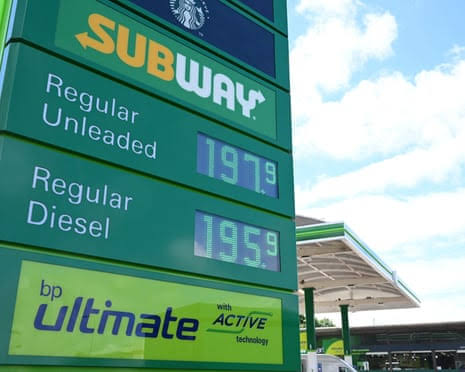
Fuel prices by country — petrol & diesel
Average pump prices for unleaded 95 and diesel across the EU, UK and US. Refreshed weekly from the EU Weekly Oil Bulletin, gov.uk and the U.S. EIA.
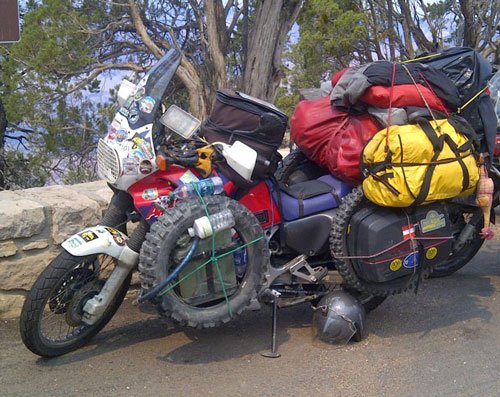
What to pack for a motorbike tour in France, Germany, Switzerland and Italy
A rider's checklist for European touring: documents, country-specific legal kit, riding gear, tools, navigation, comfort, money, medical, and the day-before checks.
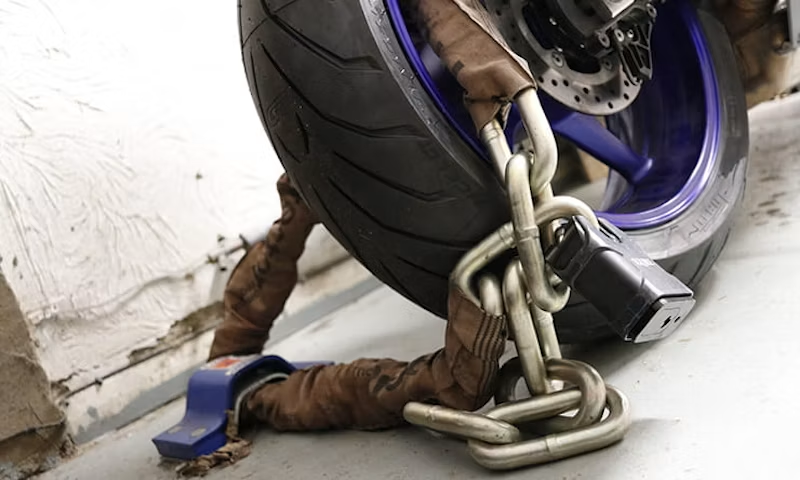
Keeping your motorbike from being stolen — at home and on tour
How bike theft actually happens, what works at home, what to carry on tour, locks and trackers worth the money, insurance small print, and what to do if your bike is taken.